
The Strategic Role of High-Titanium Slag: A Comprehensive Guide to Industrial Value and Applications
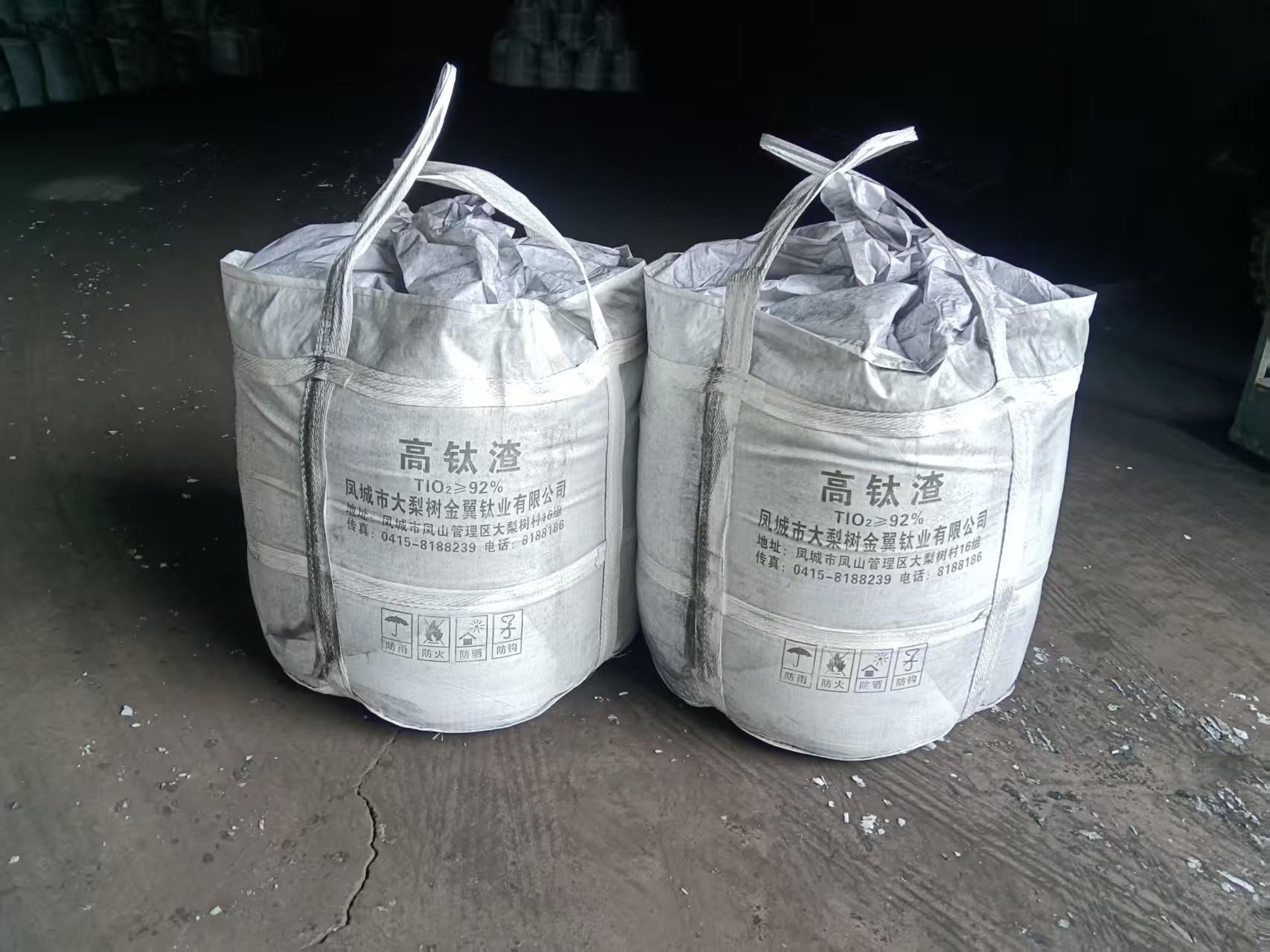
In the modern industrial ecosystem, High-Titanium Slag (High-Ti Slag) is far more than a mere intermediate product; it serves as a critical bridge connecting raw mineral extraction with high-end precision manufacturing. Produced through the electric furnace smelting of titanium concentrates, high-titanium slag typically features a TiO₂ (Titanium Dioxide) concentration ranging from 74% to 90%.
1. Prime Feedstock for Titanium Dioxide (TiO₂) Production
The Chloride Process (High-End Manufacturing): High-Ti Slag is the "ideal feedstock" for the chloride process. Through high-temperature chlorination, TiO₂ is converted into Titanium Tetrachloride (TiCl₄), which is then refined and oxidized. Compared to other ores, high-quality slag (especially low-calcium and low-magnesium variants) significantly reduces impurities, ensuring high conversion rates. The resulting Rutile-type TiO₂ is essential for coatings, weather-resistant plastics, and high-end paper industries. The Sulfate Process (Cost & Efficiency Balance): In the sulfate process, lower-grade high-titanium slag is often blended with titanium concentrates to balance reactivity. While the sulfate process faces stricter environmental scrutiny regarding waste acid, high-Ti slag helps optimize the acidolysis reaction for specific industrial pigment grades.
2. Essential for Titanium Sponge and Strategic Metals
The Kroll Process: TiCl₄ derived from high-Ti slag undergoes magnesium-thermal reduction to produce titanium sponge. This is the foundational material for aircraft engine blades, aerospace structural components, and medical implants such as artificial joints. Performance Assurance: Utilizing high-purity slag minimizes interstitial impurities, enhancing the strength-to-weight ratio and corrosion resistance of titanium alloys—crucial for aerospace and marine engineering.
3. Functional Materials and Environmental Innovation
Photocatalysis and Air Purification: TiO₂ extracted from slag exhibits excellent photocatalytic activity. Under UV or visible light, it degrades volatile organic compounds (VOCs) and can be used in water-splitting for hydrogen production. Advanced Refractory Materials: Due to its high melting point and thermo-chemical stability, high-Ti slag is used to manufacture refractory bricks for metallurgical furnaces and glass kilns, offering superior resistance to chemical erosion from molten metals. Antimicrobial Applications: Leveraging the reactive oxygen species (ROS) generated via photocatalysis, slag-based materials are increasingly researched for antimicrobial medical devices and active food packaging.
4. Green Construction and the Circular Economy
High-Performance Concrete: Finely ground high-Ti slag acts as a supplementary cementitious material. Its "micro-aggregate effect" and pozzolanic activity optimize the pore structure of concrete, significantly improving impermeability, frost resistance, and reducing the heat of hydration in mass concrete projects. Sustainable Building Materials: Using slag as a primary raw material for sintered or non-fired bricks offers high compressive strength and low water absorption, effectively recycling industrial byproducts and reducing the carbon footprint of the construction sector.
5. Specialty Chemicals and Intermetallic Compounds
Titanate Coupling Agents: It is used to produce coupling agents that improve the compatibility between inorganic fillers and organic polymers in the rubber and plastics industries. High-Performance Alloys: In the production of Titanium-Aluminum (Ti-Al) or Titanium-Silicon (Ti-Si) alloys, high-Ti slag acts as an additive to improve the high-temperature creep resistance of materials, widely used in automotive turbochargers and high-stress mechanical parts.